
Why a medieval Catalan city became the unofficial base of professional cycling — and what that means for anyone else riding there.
Girona didn’t set out to become a cycling town. Professionals moved there for reasons that are easy to list and hard to replicate: quiet roads that empty within minutes of the old town, a climate that allows riding almost year-round, an airport an hour away in Barcelona, and a compact centre where everything a rider needs is walkable.
What followed was self-reinforcing. Riders drew mechanics, mechanics drew bike shops, and the cafés adapted to a clientele that arrives in lycra at nine in the morning. The Rocacorba climb became a benchmark by being the nearest hard thing to ride.
For a visiting rider, the practical version is this: you do not need a car, the road surfaces are good, gravel starts where the tarmac ends, and you will not be the only person in cycling kit. Our Girona guide has the routes, cafés and shops.

Get the next Cycletowns Original in your inbox.
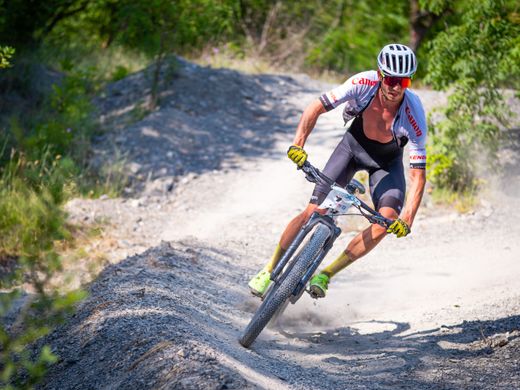
The boom reshaping where — and how — people ride, and what it means for the towns at the end of the road.

Three of the country’s great climbs on the doorstep, a rail trail through the valley, and a main street built around bikes.

The city that keeps producing Grand Tour riders, and what it’s like to ride there as a visitor.